
Welcome to this exciting journey into the world of AI keyword research tools. If you are looking to boost your website’s visibility on search engines, you have come to the right place. Whether you run a blog or an online store, you need to understand how to find the right keywords. This understanding can make all the difference. In this guide, I will teach you everything you need to know about these tools. I will explain it just like a patient teacher explains a new concept to eager students. We will cover what they are, how they work, their benefits, and much more. By the end, you will feel confident using them to create content that attracts visitors naturally.
Imagine a smart assistant sifting through billions of search queries. It finds the perfect words people use when looking for information online. That is the essence of an AI keyword research tool. It helps you discover terms that can drive traffic to your site without guessing. This guide is designed to be easy to read, with clear explanations and practical tips. Let us dive in and unlock the secrets to smarter SEO.

What Is AI SEO? How Artificial Intelligence Is Changing Search
What is an AI Keyword Research Tool?
Let us start with the basics. An AI keyword research tool is a software program that uses artificial intelligence to help you find and analyze keywords. Keywords are the words or phrases people type into search engines like Google when they want to find something. For example, if someone is searching for tips on healthy eating, they type “best healthy recipes for beginners.”
Traditional keyword tools rely on basic data. For instance, search volume tells you how many times a keyword is searched each month. The competition level shows how hard it is to rank for that term. But AI takes this a step further. It uses machine learning and natural language processing to understand the context behind searches. This means it can figure out what users really mean, not just what they type.
Think of it like this: An AI tool can decide if a user searching for “apple” means the fruit. It can also decide if the user means the tech company. It uses related searches and trends to make this distinction. This helps you target the right audience. According to experts, these tools process vast amounts of data quickly, making them essential for modern SEO. They are especially useful for content creators, marketers, and website owners. These individuals want to rank higher without spending hours on manual research.
In 2026, AI keyword tools will have become even smarter. They integrate with other SEO features like content improvement and competitor analysis. This means you can find keywords that match your niche, whether it is technology, lifestyle, or something unique. The goal is to create content that answers real questions, leading to better engagement and more visitors.
How Do AI Keyword Research Tools Work?
Now that you know what these tools are, let us explore how they work. It is like peeling back the layers of an onion to see the magic inside.
First, you start with a seed keyword. This is a basic term related to your topic, like “keyword research.” The AI tool scans search engine data. It also analyzes social media trends and competitor websites. This process generates a list of related keywords. It uses algorithms to predict search volume, difficulty, and potential traffic.
Next comes the AI part: natural language processing. This technology understands human language, identifying synonyms, questions, and long-tail keywords. Long-tail keywords are longer phrases like “how to use AI for keyword research in 2026.” These phrases often have less competition. But, they have higher intent. Intent means what the user wants – to buy, learn, or compare.
Machine learning allows the tool to learn from patterns. For instance, it can cluster keywords into groups based on topics. If you are writing about fitness, you can group “best home workouts” with “easy exercises for beginners.” This helps you build comprehensive content plans.
Many tools also use predictive analytics to forecast trends. In 2026, with AI advancements, they can even suggest content outlines based on top-ranking pages. Integration with APIs from Google or other search engines provides real-time data, ensuring your research is up-to-date.
For beginners, the process is simple: Enter your topic, review suggestions, and pick the best ones. Advanced users can filter by location, device type, or even sentiment. It is all about making data accessible so you can focus on creating great content.
The Benefits of Using AI for Keyword Research
Why bother with AI when old techniques exist? The benefits are huge, and they can transform your SEO strategy.
Speed is a big one. Manual research takes days, but AI does it in minutes. This saves time for busy site owners. Accuracy improves too, as AI analyzes more data than a human. It spots hidden opportunities, like emerging trends before they explode.
Understanding user intent is another perk. AI helps you create content that matches what people need, leading to higher click-through rates and lower bounce rates. For example, if users want quick answers, you can improve for featured snippets.
Cost-effectiveness matters. Many tools offer free tiers or affordable plans, making them accessible for small sites. They also reduce guesswork, so your content performs better from the start.
Scalability is key for growing businesses. AI handles large volumes of keywords, perfect for e-commerce or blogs with many categories. Plus, it integrates with content creation, suggesting titles, meta descriptions, and even full outlines.
In studies, sites using AI tools see up to 20-30% more organic traffic. It is not just about rankings; it is about connecting with your audience in meaningful ways.

AI Keyword Research: How to Find High-Intent Keywords in 2026
Top AI Keyword Research Tools in 2026
With so many options, which tools should you try? Here is a roundup of the best ones based on current trends.
SEMrush leads the pack. It offers AI-powered keyword magic, suggesting thousands of terms with metrics like volume and intent. Its content analyzer helps optimize posts for SEO. Pricing starts at around $120/month, but it is worth it for comprehensive features.
Ahrefs is another favorite. Known for its backlink analysis, its AI enhances keyword explorer with difficulty scores and click estimates. Great for competitive research.
ClickRank is emerging as a 2026 star. It combines keyword discovery with real-time tracking, using AI to prioritize terms based on your site’s performance.
SE Ranking uses machine learning for traffic forecasts and keyword grouping. It is user-friendly and includes site audits.
For free options, ChatGPT or Google Gemini can generate keyword ideas, though they lack deep metrics. Combine them with tools like Google Keyword Planner for the best results.
Other notables include Surfer SEO for content optimization and Frase for topic clustering. Choose based on your needs – budget, features, and ease of use.
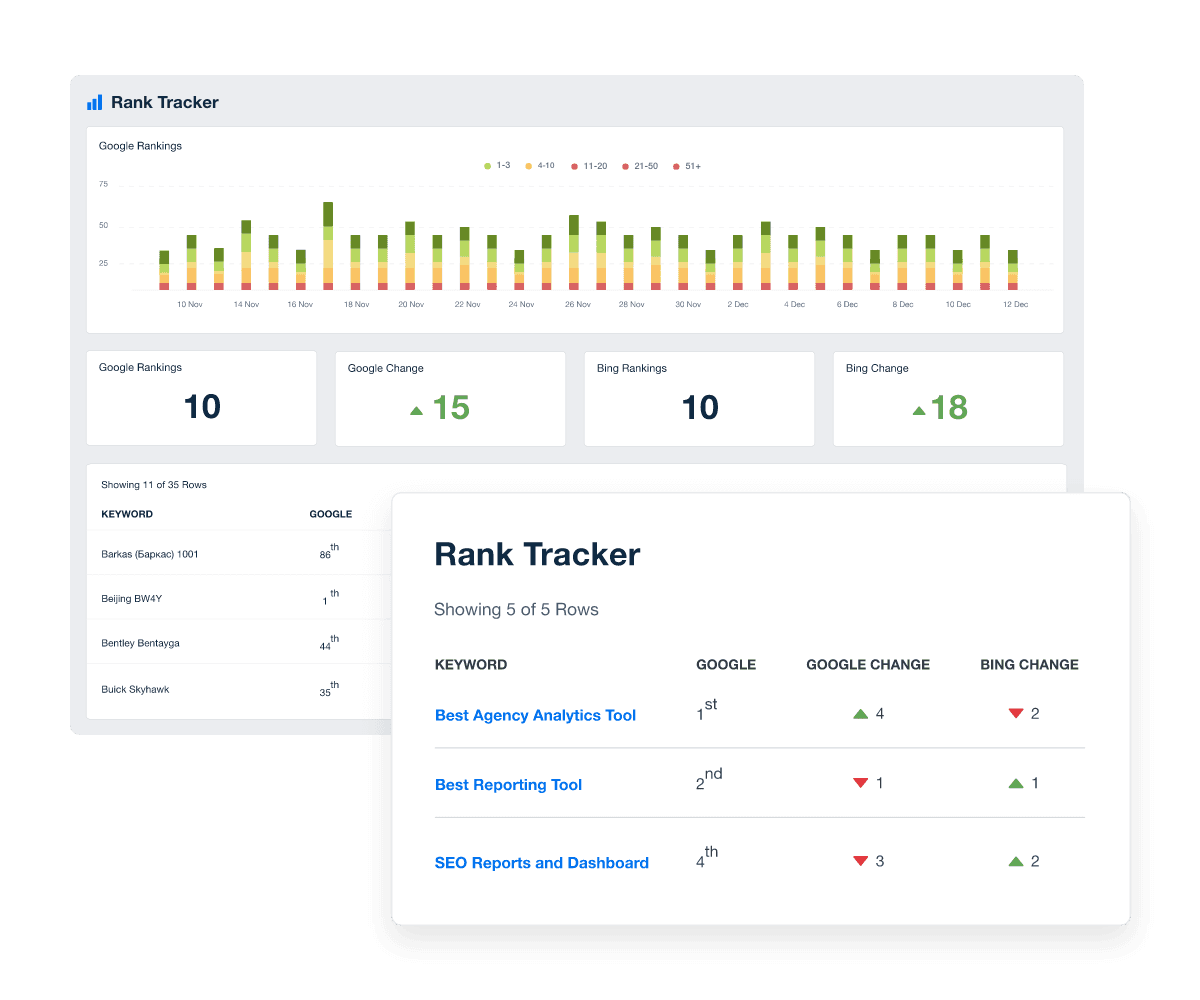
SEO Reporting Dashboard Template & Examples
Step-by-Step Guide to Using an AI Keyword Research Tool
Ready to get hands-on? Follow this simple guide to start your research.
Step 1: Choose your tool. Sign up for SEMrush or a free alternative.
Step 2: Enter a seed keyword related to your content, like “AI tools for blogging.”
Step 3: Review the suggestions. Look at search volume, keyword difficulty, and CPC (cost per click) for ad potential.
Step 4: Analyze intent. Use filters to find informational, navigational, or transactional keywords.
Step 5: Cluster keywords. Group similar terms to plan topic clusters, which boost SEO by linking related content.
Step 6: Check competitors. See what terms top sites rank for and find gaps.
Step 7: Export and plan. Create a content calendar based on your findings.
Step 8: Monitor and refine. Track performance and update as trends change.
This process can take under an hour with AI, compared to days manually. Focus on keywords that align with your audience’s interests.

Using AI for Keyword Research: A Powerful Step-by-Step Guide
AI vs. Traditional Keyword Research: What’s the Difference?
Traditional methods involve tools like Google Keyword Planner, where you manually input terms and sift through data. It is straightforward but limited.
AI changes the game by automating analysis. Traditional tools give raw numbers; AI provides insights like intent mapping and predictions. For example, AI can detect seasonal trends automatically.
Scalability differs, too. Traditional research suits small projects, but AI handles enterprise-level needs. Accuracy is higher with AI due to machine learning from vast datasets.
However, traditional methods are often free and simple for beginners. AI has a learning curve, but it offers more value long-term. In 2026, blending both yields the best results – use AI for depth and traditional for basics.

AI-Powered Search vs Traditional Keyword Search: Recruiter’s Guide
Future Trends in AI Keyword Research
Looking ahead, AI will evolve further. Voice search optimization will grow, as AI analyzes spoken queries for natural phrases.
Personalization will increase, with tools tailoring suggestions to your site’s niche and audience behavior.
Integration with other AI, like content generators, will create end-to-end SEO workflows. Expect more focus on E-E-A-T (Experience, Expertise, Authoritativeness, Trustworthiness) in rankings.
Ethical AI will rise, ensuring tools avoid biased data. By 2030, AI predict user needs before searches happen.
Staying updated means experimenting with new features.

Future of SEO: Tools, Trends, and Technologies to Watch
Case Studies and Real-World Examples
Let us see AI in action. A small e-commerce site used SEMrush’s AI to find long-tail keywords, increasing traffic by 40% in three months.
A blog on health topics switched to Ahrefs, clustering keywords around “mental wellness.” Engagement soared as content matched user intent.
In India, an agency used Surfer AI, boosting client rankings for competitive terms. These stories show AI’s power – it turns data into results.
Conclusion: Embrace AI for Your SEO Success
We have covered a lot, from basics to advanced tips. AI keyword research tools are your allies in the digital world, making SEO accessible and effective. Start small: Pick a tool, research keywords, and create content. Remember, the key is consistency and quality.
As you apply these lessons, watch your site grow. SEO is a marathon, but with AI, you have a head start. Thank you for joining this guide – now go conquer those search rankings!